

Orthophosphate-based corrosion inhibitors remain one of the most widely used tools for corrosion control in drinking water systems. When evaluating treatment options, utilities often focus on phosphate concentration, dosage requirements, and corrosion control performance. While these factors are important, they represent only part of the overall decision-making process.
The choice between phosphoric acid, zinc orthophosphate, and neutralized orthophosphate products can also affect transportation requirements, operator safety, chemical storage, spill response procedures, equipment selection, and day-to-day plant operations.
As utilities continue to balance regulatory compliance, operational efficiency, and risk management, it may be beneficial to evaluate corrosion inhibitor programs through a broader lens than phosphate content alone.
Looking Beyond Corrosion Control Performance
Corrosion control performance is understandably a primary consideration when selecting an orthophosphate inhibitor. However, treatment plants are responsible for more than achieving corrosion control objectives. Utilities must also manage safety programs, regulatory requirements, infrastructure protection, chemical handling procedures, and operating budgets.
In many cases, these operational considerations can have a meaningful impact on the overall cost and complexity of a corrosion control program.
Evaluating both performance and operational implications can help utilities identify solutions that align with their treatment goals while supporting long-term operational efficiency.
Transportation, Safety, and Regulatory Considerations
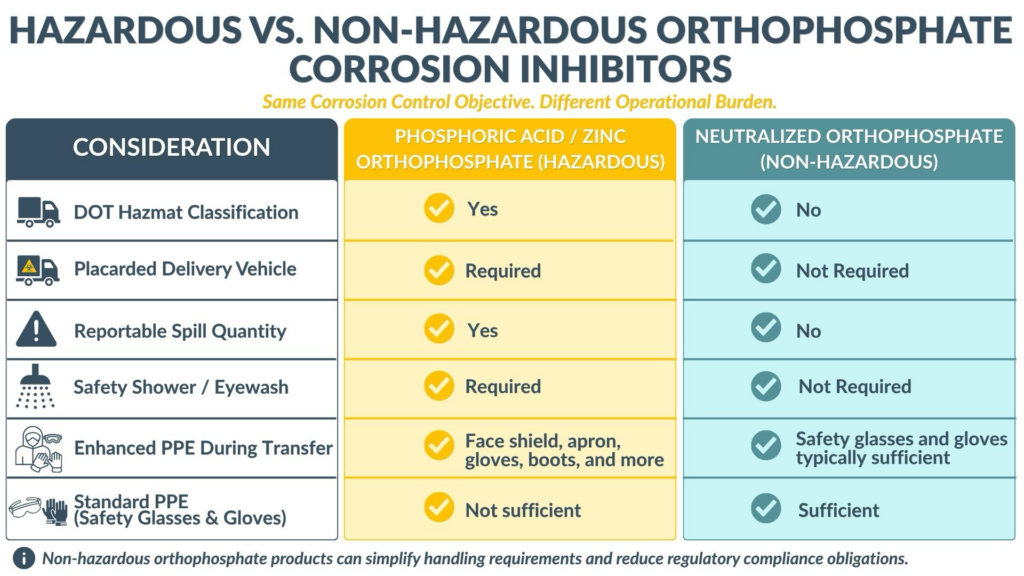
Phosphoric acid and zinc orthophosphate corrosion inhibitors are classified as DOT hazardous materials for transportation and handling. As a result, these products require hazmat-certified transportation and placarded delivery vehicles.
In addition, both products have reportable spill quantities, which can trigger additional response and reporting requirements in the event of an off-site release.
From a workplace safety perspective, the corrosive nature of these products typically requires enhanced personal protective equipment during transfer and handling activities, including:
- Safety glasses with side shields
- Face shields
- Chemical-resistant gloves
- Aprons
- Protective footwear
OSHA requirements may also necessitate safety showers and eyewash stations in chemical transfer areas where corrosive products are handled.
Neutralized orthophosphate corrosion inhibitors are not classified as DOT hazardous materials and generally do not carry the same transportation, spill reporting, or workplace safety requirements. Utilities that rely on dedicated chemical delivery may still benefit from simpler handling procedures and reduced compliance-related burdens associated with hazardous chemical storage and transfer.
Operational Impacts Within the Treatment Plant
Chemical selection can also influence equipment requirements and facility maintenance considerations.
Due to their corrosive characteristics, phosphoric acid and zinc-based products often require more robust equipment materials and corrosion-resistant components. These requirements can affect both initial capital investment and long-term maintenance costs.
Utilities should also consider the potential impact of accidental spills, splashes, or leaks. Contact with phosphoric acid or zinc orthophosphate products can have a greater effect on concrete, steel, coatings, and other plant infrastructure than neutralized alternatives.
While these incidents may be infrequent, their cumulative impact over time can contribute to maintenance expenses and facility upkeep requirements.
Considerations for Low-Hardness and Low-Alkalinity Waters
Source water characteristics can also influence corrosion inhibitor selection.
In low-hardness and low-alkalinity waters, typically less than 50 mg/L as CaCO₃, the addition of zinc orthophosphate products may increase corrosion control over other orthophosphates such as phosphoric acid or neutralized orthophosphate products.
Neutralized orthophosphate formulations generally have less impact on finished water pH due to their higher inherent pH characteristics.
For utilities treating low-alkalinity waters, this may help simplify treatment operations and reduce the need for supplemental pH adjustment while supporting more consistent finished water chemistry. When treatment changes alter finished water chemistry, see how scheme changes can affect corrosion control.
Understanding Total Cost of Ownership
When comparing corrosion inhibitor options, the purchase price of the chemical is only one component of overall program cost.
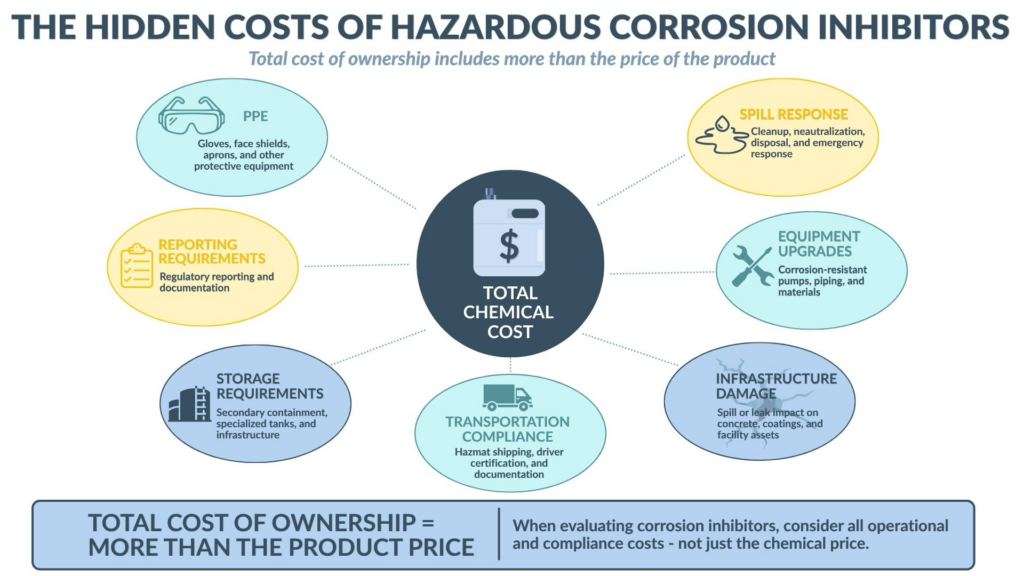
Utilities may also incur costs associated with:
- Personal protective equipment
- Safety infrastructure
- Chemical storage requirements
- Spill prevention planning
- Regulatory reporting
- Equipment maintenance
- Spill response and disposal
For hazardous materials, spill response activities can be particularly costly due to neutralization, cleanup, disposal, and reporting requirements.
These factors may not appear on a chemical bid sheet, but they can influence the long-term economics of a corrosion control program.
Evaluating total cost of ownership can provide a more complete understanding of the operational and financial implications associated with different treatment approaches. Documented municipal performance data can help utilities compare program outcomes beyond bid-sheet pricing.
Balancing Performance with Operational Simplicity
One of the most common concerns utilities raise when evaluating non-hazardous corrosion inhibitors is whether performance must be sacrificed to achieve operational and safety benefits.
In many cases, the tradeoff may be smaller than expected.
Several neutralized orthophosphate formulations provide phosphate concentrations that are comparable to traditional corrosion control products. As a result, utilities may be able to maintain corrosion control objectives while reducing certain transportation, handling, and compliance requirements.
As with any corrosion control program, selecting the appropriate treatment approach requires balancing water quality objectives, operational considerations, and site-specific conditions.
Public Perception and Risk Management
Public expectations surrounding water treatment continue to evolve, and utilities increasingly operate in an environment where incidents can quickly attract attention through social media and online platforms.
Hazardous chemical spills, transportation incidents, or handling events may generate public concern regardless of the actual risk posed to drinking water quality.
While public perception should not drive treatment decisions, it can become part of a utility’s broader risk management strategy.
Evaluating opportunities to reduce operational risk may also help reduce the potential for unwanted public scrutiny associated with chemical handling incidents. Carus approaches safety and stewardship through programs such as Responsible Care®.
A Broader Approach to Corrosion Inhibitor Selection
Orthophosphate concentration remains an important factor in corrosion control program design, but it is rarely the only factor that influences long-term success.
Transportation requirements, workplace safety considerations, regulatory obligations, treatment impacts, infrastructure protection, and total cost of ownership can all affect the overall effectiveness and sustainability of a corrosion control program.
By evaluating both performance and operational considerations, utilities can make more informed decisions that support corrosion control objectives while aligning with the practical realities of plant operation and system management. Explore Carus phosphate solutions or contact Carus to discuss your system’s needs.
