
Accelerated Bioremediation for Petroleum Hydrocarbon-Contaminated Soil
RemActiv™ is a concentrated liquid bioremediation enhancer designed to accelerate the natural breakdown of petroleum hydrocarbons in contaminated soil. Its dual-action formula combines essential nutrients with natural surfactants to stimulate native microorganisms and help make hydrocarbon contaminants more accessible for biological degradation.
Easy to dilute and apply using conventional equipment, RemActiv helps environmental consultants, contractors, industrial operators, and property owners move petroleum-impacted soil toward remediation goals more efficiently.
Talk With Carus About Your Bioremediation Project
Tell us about your site and a Carus remediation specialist will follow up.
Bioremediation Explained
Petroleum hydrocarbons can persist in soil following fuel releases, industrial activities, transportation incidents, and other spills. Naturally occurring microorganisms can break down many of these contaminants, but the process may be limited by factors such as nutrient availability, contaminant accessibility, moisture, oxygen, temperature, and soil conditions.
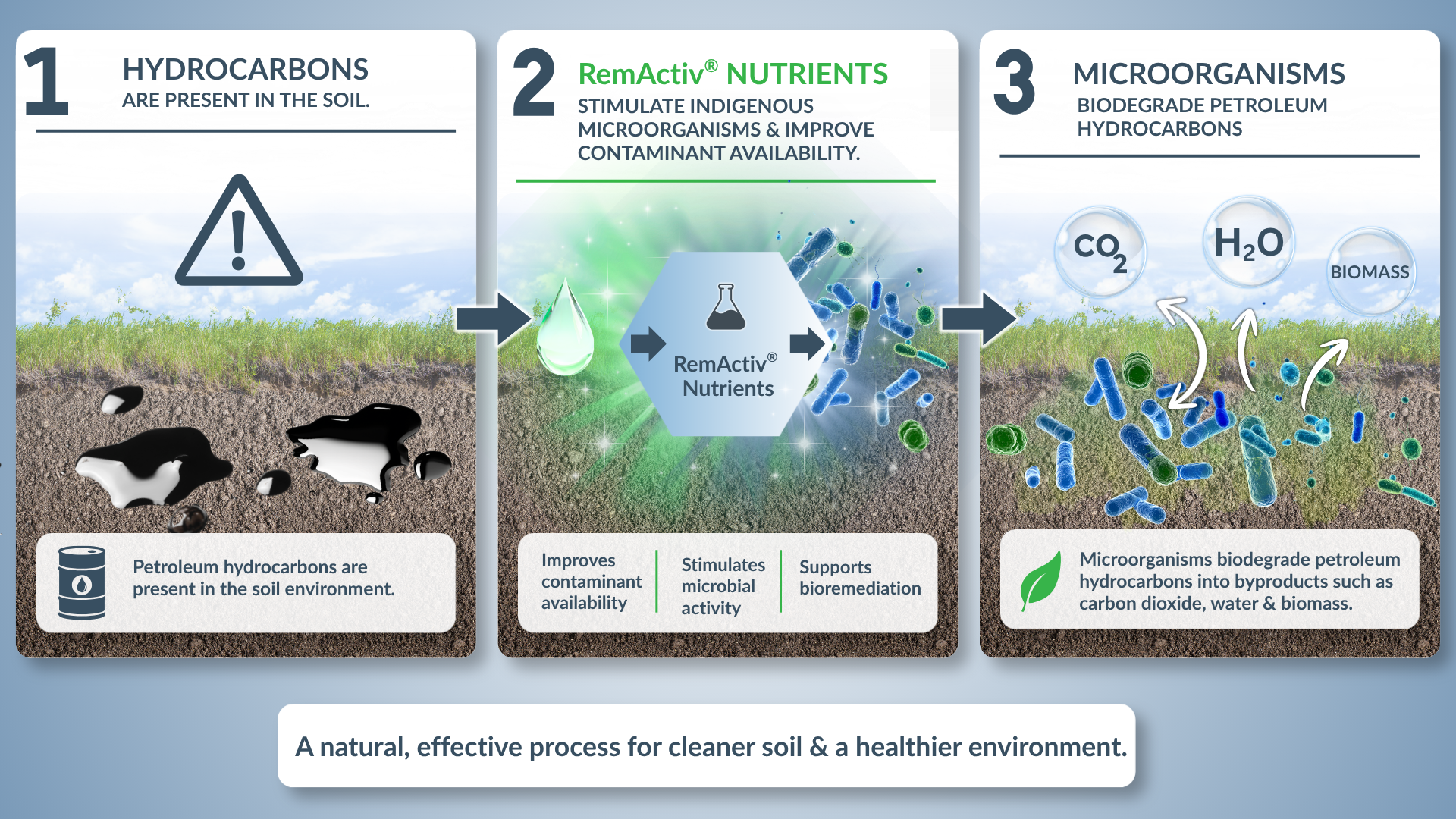
Bioremediation uses biological processes to transform petroleum hydrocarbons into simpler substances. One approach, known as biostimulation, supplies nutrients and other supporting ingredients to help indigenous microorganisms grow and increase their contaminant-degrading activity.
RemActiv is designed to enhance this natural process. Its nutrient blend supports microbial growth, while its natural surfactants help increase the availability of hydrocarbons attached to soil particles. Together, these functions help create conditions that support faster degradation than natural attenuation alone.

What Is RemActiv™?
RemActiv is a liquid bioremediation enhancer formulated for petroleum hydrocarbon-contaminated soil. It contains natural surfactants and a nutrient mixture optimized to stimulate the growth and activity of local microorganisms responsible for hydrocarbon degradation.
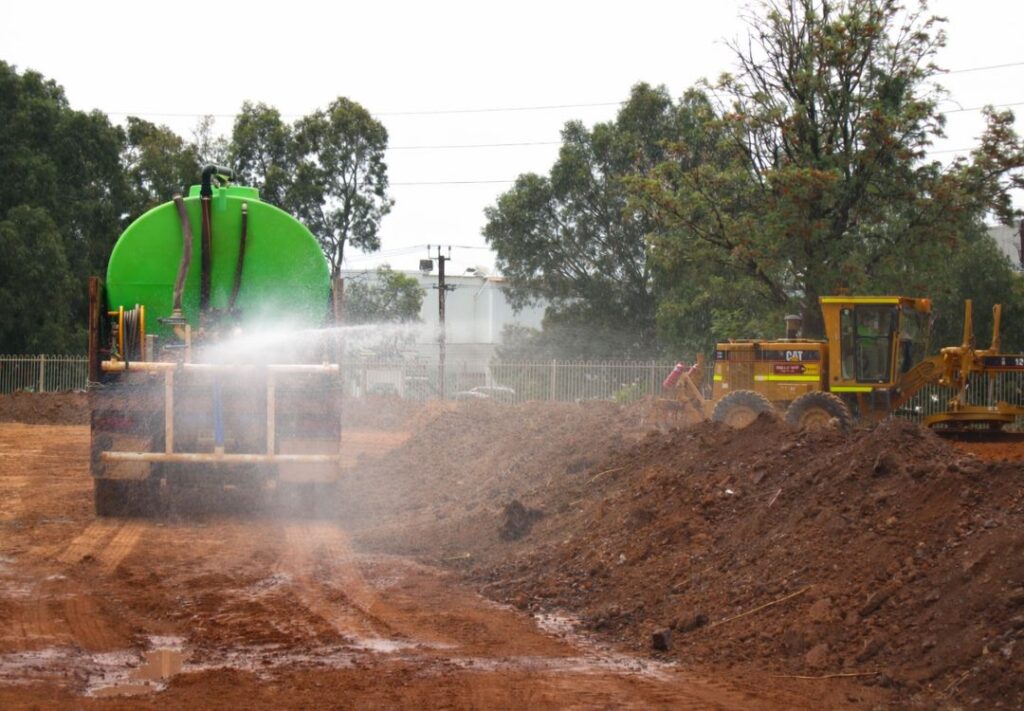
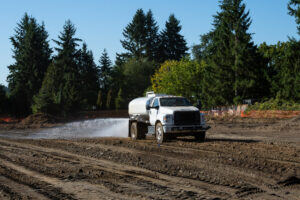
The product is supplied as a 20:1 liquid concentrate and is diluted on-site with non-chlorinated water. Depending on the application, it can be applied using equipment such as a water truck, dosing tank, backpack sprayer, or irrigation system.
RemActiv can be incorporated into contaminated soil in ex-situ stockpiles, biopiles, surface spills, and in-situ biofarming applications. Proper moisture, aeration, incorporation, and monitoring are important components of an effective treatment program.
How RemActiv™ Works
Stimulates Indigenous Microorganisms
RemActiv supplies a formulated mixture of nutrients designed to stimulate the growth of microorganisms already present in the soil. These microorganisms perform the biological work of breaking down petroleum hydrocarbons.
Improves Hydrocarbon Availability
Natural surfactants help increase the availability of hydrocarbons associated with soil particles, making the contaminants more accessible to the microorganisms responsible for degradation.
Supports Faster Biological Degradation
By improving the conditions that support microbial activity, RemActiv can accelerate the reduction of Total Petroleum Hydrocarbons compared with natural attenuation alone. Independent research and field trials have evaluated the product under petroleum hydrocarbon and diesel contamination scenarios.
Key Benefits
Accelerate Bioremediation
Helps stimulate the biological degradation of petroleum hydrocarbons, potentially shortening treatment timelines compared with relying on natural attenuation alone.
Easy Field Application
The liquid concentrate can be diluted on site and applied using commonly available equipment, including water trucks and hand sprayers.
Reduce Freight and Handling Requirements
The 20:1 concentrated formulation reduces the volume that must be transported compared with shipping a pre-diluted product.
Support a Range of Project Scales
Available in multiple container sizes to support applications ranging from emergency spill response to larger biofarming and soil treatment programs.
Backed by Independent Evaluation
RemActiv has been examined in independent university research and field trials involving petroleum hydrocarbon-contaminated soil.
Petroleum Hydrocarbons Commonly Addressed
RemActiv is formulated to support the degradation of aliphatic and aromatic petroleum hydrocarbons, including contamination associated with:
- Diesel fuel
- Oils and lubricants
- Gasoline and other petroleum fuels
- Total Petroleum Hydrocarbons, or TPH
- Total Recoverable Hydrocarbons, or TRH
- BTEX compounds
The appropriate treatment strategy depends on the type, concentration, age, and availability of the hydrocarbons, along with the soil characteristics and the presence of other contaminants.

Applications
RemActiv supports biological treatment strategies across several petroleum hydrocarbon remediation applications.
Emergency Spill Response
Apply RemActiv as part of a planned response to petroleum releases where soil can be treated, mixed, aerated, and monitored.
Biopiles and Stockpile Treatment
Treat excavated petroleum-impacted soil in managed stockpiles or biopiles where moisture and aeration conditions can be maintained.
Biofarming and Land Treatment
Support in-situ or ex-situ treatment of impacted soil across designated treatment areas using conventional soil-handling and application equipment.
Industrial and Transportation Sites
Address petroleum hydrocarbon contamination associated with rail facilities, mines, maintenance areas, fuel-handling operations, and other industrial settings.
Organic Waste Treatment
Support biological treatment strategies for applicable hydrocarbon-containing organic waste materials.

Rail and transportation corridors, a common setting for petroleum hydrocarbon impacts
Mechanical incorporation through a treatment windrow
How RemActiv™ Is Applied
RemActiv is designed for integration into conventional soil remediation operations. A typical application includes the following general stages:
1. Evaluate the Site
Determine the volume of soil requiring treatment and assess the petroleum hydrocarbon concentration, soil type, porosity, moisture content, oxygen availability, regulatory objectives, and practical application conditions.
2. Prepare the Concentrate
Mix the RemActiv concentrate thoroughly so any settled product is fully reconstituted before dilution.
3. Dilute With Non-Chlorinated Water
The recommended dilution is 20 parts non-chlorinated water to one part RemActiv concentrate. Project-specific dosage and dilution decisions should account for site conditions and treatment objectives.
4. Apply and Incorporate
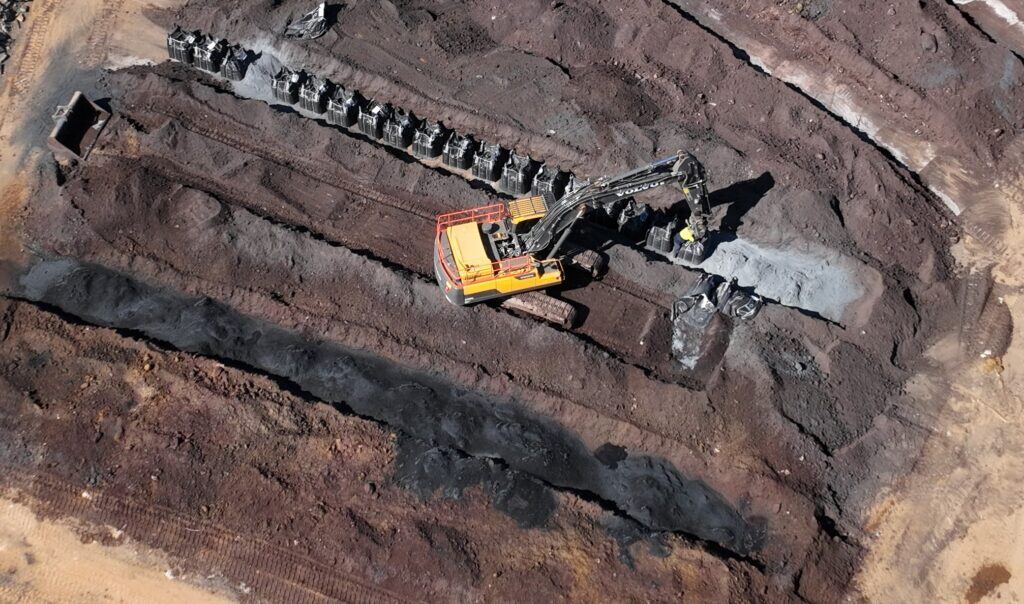
Distribute the diluted solution evenly while thoroughly mixing it into the contaminated soil. Depending on the application, equipment may include water trucks, sprayers, excavators, loaders, rotary hoes, dosing systems, or irrigation equipment.
5. Maintain Moisture and Aeration
Maintain evenly moist and adequately aerated soil conditions to support microbial activity. If the soil dries out or lacks sufficient oxygen, the biological degradation process may slow or stop.
6. Monitor Treatment Progress
Collect and analyze soil samples for TPH over time. Analytical results should be used to evaluate progress and inform any adjustment to site management or treatment activities.
Technical note: Application rates vary based on contamination levels and whether treatment involves a land farm, biopile, or spill area. The formal RemActiv Application Note and SDS should remain the controlling resources for dosage, handling, and safety information.
Proven Bioremediation Performance
Independent University Research
A 28-week mesocosm study conducted by researchers at RMIT University evaluated RemActiv as the biostimulator in petroleum hydrocarbon-contaminated soil.
In the TPH-only treatment, biostimulation reduced the starting TPH concentration by 95.9%, compared with a 55.6% reduction through natural attenuation. In soil co-contaminated with TPH and lead, biostimulation produced an 83.7% TPH reduction, compared with 59.7% through natural attenuation.
The study also showed that co-contaminants can affect remediation performance and soil ecotoxicity. The researchers concluded that the complications associated with co-contamination should be a priority consideration when designing a site-specific bioremediation strategy.
Pacific National Diesel Trial
In an independently assessed rail-industry trial, soil spiked with diesel to approximately 35,000 mg/kg TRH received a single RemActiv application and was monitored for six months. The trial reported:
- More than 65% TRH degradation within the first month
- More than 80% total TRH reduction within six months
- A final concentration of 6,613 mg/kg
- A result 28% below the referenced 9,270 mg/kg NEPM ESL trigger value
The untreated natural-attenuation control retained 11,720 mg/kg TRH after six months and remained above the referenced trigger value.
Product Availability
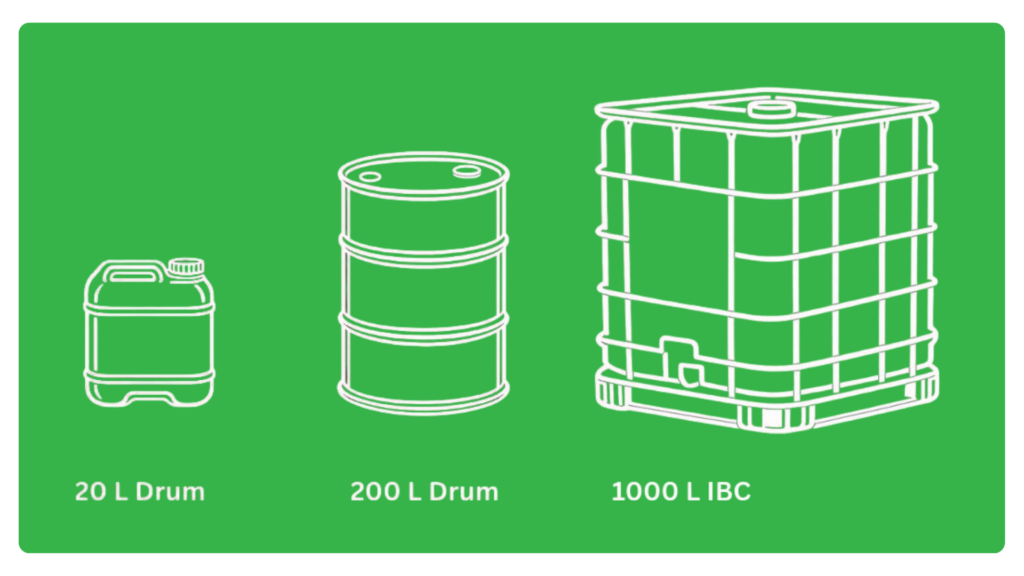
RemActiv is supplied as a 20:1 concentrated liquid and is available in:
- 5.3 US gallon drums
- 53 US gallon drums
- 264 US gallon IBC totes
The concentrated formulation can be diluted at the application site with non-chlorinated water, helping reduce freight volume compared with transporting pre-diluted material.
Important Project Considerations
Successful bioremediation depends on more than product dosage alone. Factors that should be evaluated include:
- Soil type, porosity, and moisture content
- Type and concentration of petroleum hydrocarbons
- Degree of contaminant weathering
- Regulatory and treatment objectives
- Oxygen availability and aeration
- Temperature
- Consistency of product distribution
- Mixing and application methods
- Presence of metals or other co-contaminants
- Available equipment and site access
Treatment programs should be developed and adjusted using site-specific information and analytical monitoring results.
Technical Support Through Carus
Carus works with customers to understand site conditions, evaluate treatment objectives, and identify appropriate RemActiv application approaches. Support may include:
- Product selection based on project requirements
- Dosage optimization
- Application planning
- Guidance on product incorporation
- Support throughout field implementation and monitoring
Remediation outcomes depend on site-specific conditions, so early evaluation and proper application planning are important to successful project execution.
Why Carus
Carus brings decades of experience helping customers address complex environmental and infrastructure challenges.
Through our relationship with RemBind, customers in the United States gain access to RemActiv bioremediation technology along with responsive product support, application guidance, and technical expertise. Carus works alongside consultants, contractors, and site owners to help translate remediation objectives into practical field implementation.
Whether responding to a petroleum spill, evaluating treatment of excavated soil, or planning a larger biofarming program, Carus can help customers determine whether RemActiv is appropriate for their site.
Resources
Coming Soon
Ready to Discuss Your Project?
Whether you are responding to a petroleum release, evaluating treatment options for hydrocarbon-contaminated soil, or looking to accelerate an existing bioremediation program, Carus can help. Contact Carus to learn more about RemActiv™ and discuss your project requirements.