
Ozone (O₃) is a powerful oxidant used in a wide range of applications, from drinking water treatment and wastewater treatment to digital printing and chemical processing. While ozone is highly effective, any unused ozone in the off-gas stream must be destroyed before discharge to help protect workers, equipment, and the environment.
When evaluating ozone destruction technologies, two options are commonly considered: CARULITE® catalysts and activated carbon. While both can reduce ozone concentrations, they operate very differently and can have significantly different implications for performance, maintenance, and long-term operating costs.
Understanding the Difference
The primary difference between CARULITE catalysts and activated carbon lies in how they interact with ozone.
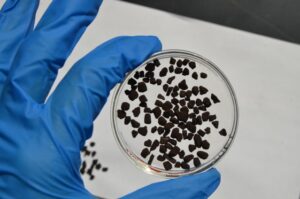
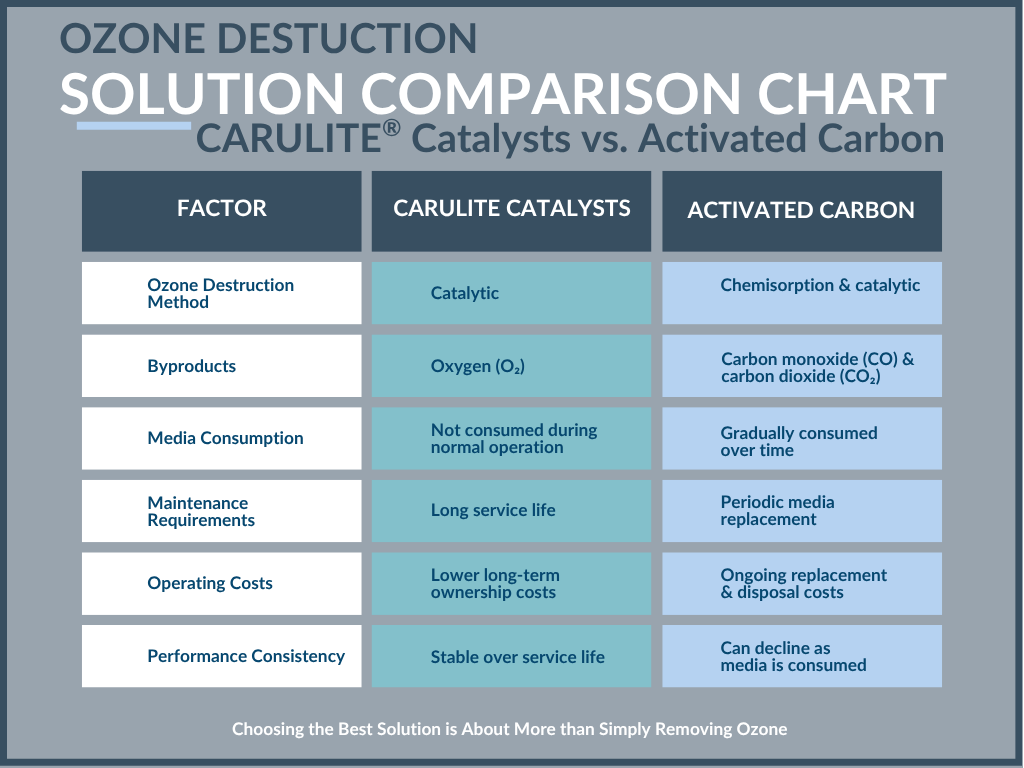
CARULITE catalysts, including CARULITE® 200, are composed of manganese dioxide and copper oxide. As ozone-containing air passes through the catalyst bed, ozone is converted directly into oxygen (O₂). The catalyst facilitates the reaction without being consumed, allowing it to provide long-term ozone destruction performance.
Activated carbon uses a combination of chemisorption and catalytic reactions to reduce ozone concentrations. Over time, the carbon media is gradually consumed during the reaction process, causing performance to decline and requiring periodic replacement. The reaction can also generate carbon monoxide (CO) and carbon dioxide (CO₂) as byproducts.
Another important consideration is safety. Activated carbon is a combustible material, and the heat generated during ozone destruction can create conditions that increase the risk of media degradation or, in some cases, fire. Proper system design, monitoring, and maintenance are essential when using activated carbon for ozone destruction applications.
For facilities seeking a long-term ozone destruction solution, these distinctions are important. One technology is designed to continuously catalyze the reaction, while the other is a consumable media that requires ongoing maintenance, replacement, and additional operational considerations.
Why Many Facilities Choose CARULITE® Catalysts
Lower Total Cost of Ownership
When evaluating ozone destruction systems, the initial purchase price is only part of the equation. Maintenance, replacement media, labor, disposal costs, and downtime all contribute to total cost of ownership.
Because CARULITE catalysts are not consumed during the ozone destruction reaction, a properly designed system can provide years of service before catalyst replacement is required. In contrast, activated carbon must be replaced periodically as the media is depleted.
For facilities operating continuously or managing large ozone volumes, reducing replacement frequency can result in meaningful operational savings over the life of the system.
Simplified Operations
Activated carbon systems require ongoing monitoring of media condition and replacement schedules. As the carbon is consumed, performance can gradually change, making maintenance planning an important part of system operation.
CARULITE catalysts provide more consistent performance over their service life, helping facilities reduce maintenance demands and minimize disruption to operations.
Proven Performance Across Industries
CARULITE 200 catalyst has been successfully used in a variety of ozone destruction applications, including:
- Municipal and industrial water treatment
- Drinking water disinfection systems
- Wastewater treatment facilities
- Corona treaters
- Digital printing operations
- Flexible packaging and film production
- Chemical processing applications
Because CARULITE catalysts operate effectively at ambient temperatures without an external heat source, they can often be integrated into existing ozone destruct systems with relative ease.
For applications where ozone and volatile organic compounds (VOCs) are present together, other CARULITE formulations may provide additional benefits depending on the process requirements.
When Activated Carbon May Be Considered
Activated carbon may still be considered in certain low-concentration ozone applications where replacement frequency is manageable and system requirements are relatively simple.
However, as ozone concentrations, operating hours, and performance demands increase, facilities often find that the maintenance requirements, safety considerations, and ongoing replacement costs associated with activated carbon become less attractive compared to catalytic alternatives.
The Bottom Line
Choosing an ozone destruction technology is about more than simply removing ozone from an exhaust stream. Long-term reliability, maintenance requirements, operating costs, safety considerations, and system performance all play an important role in determining the best solution.
For many water treatment, industrial, and printing applications, CARULITE catalysts offer a compelling alternative to activated carbon by providing long service life, consistent performance, and lower long-term operating costs.
If you’re evaluating ozone destruction options for a specific application, the Carus technical team can help assess your off-gas composition, flow rates, and operating conditions to recommend the right solution for your facility.
Ready to learn more? Contact Carus at 1-800-435-6856 or salesmkt@carusllc.com, or explore our full line of CARULITE catalysts and ozone destruction solutions.