
Consider How It May Impact Your Corrosion Control Program
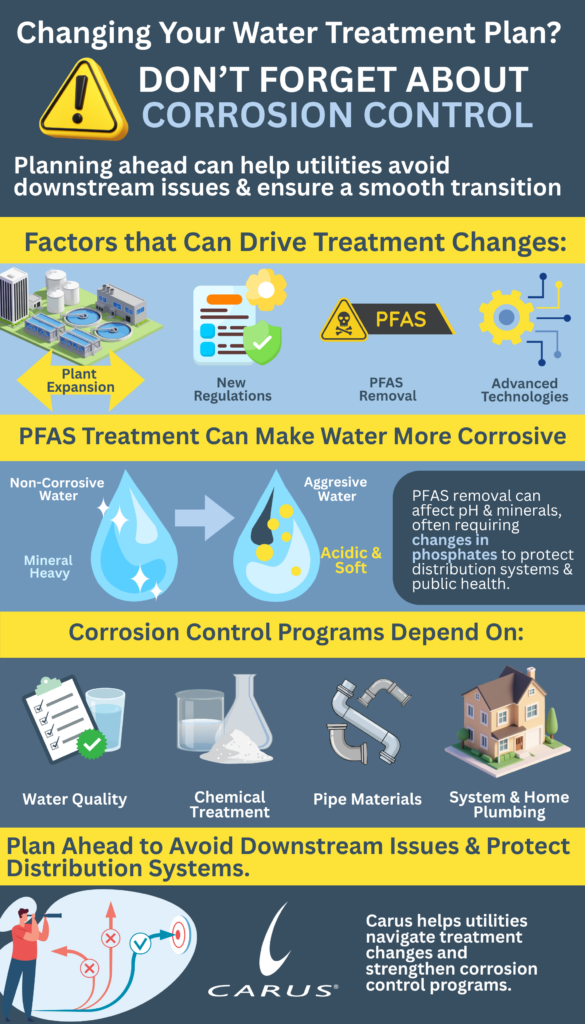
Many water treatment facilities are currently evaluating changes to how they treat drinking water. These changes can be driven by a number of factors, including capital improvements, plant expansions, regulatory updates, or the addition of new treatment technologies, including systems designed to address PFAS.
While PFAS treatment is often the primary focus, it’s important to recognize that many of today’s PFAS removal technologies can significantly alter finished water quality. For example, reverse osmosis (RO) systems are highly effective at removing PFAS, but they also strip the water of hardness and other compounds. These shifts in water chemistry can have a direct, often unintended, impact on corrosion control.
Successful corrosion control programs depend on a balance of water quality parameters, including hardness, metal content, distribution system water age, and the types of metal present throughout the system. When treatment changes alter that balance, corrosion risk can increase. In the case of RO, the resulting softer, lower-alkalinity water can become more aggressive, increasing the potential for lead and copper release in distribution systems and private and residential plumbing.
As a result, utilities may find that their existing corrosion control approach is no longer sufficient. Adjustments, such as changes to phosphate treatment or the addition of new corrosion inhibitors, may be necessary to maintain compliance and protect public health.
As municipalities evaluate changes to their treatment processes, especially those driven by PFAS regulations, it’s critical to look beyond the treatment technology itself. Reviewing how these changes affect finished water chemistry and what that means for corrosion control should be part of the conversation from the outset. Planning ahead can help avoid downstream issues and ensure a smooth transition to a new treatment strategy.
Carus works with utilities to evaluate how treatment changes impact corrosion control and to develop phosphate programs that help protect distribution systems and public health.